
Is your child starting their first step towards school in 2026? As a parent, it is natural to feel anxious about “What will my child learn in Nursery?” or “Is the burden too much for a 3-year-old?”.
Relax! The Nursery Class Syllabus 2026 has evolved significantly under the New Education Policy (NEP 2020). Gone are the days of rote memorization. Today, the focus is on “Activity-Based Learning” involving storytelling, phonics, and sensory play.
In this complete guide, we provide a detailed Month-wise Syllabus for Nursery & LKG covering CBSE, ICSE, and State Board patterns. Whether you are a parent teaching at home or a school owner designing a curriculum, this guide is for you.
| 1. English | Pre-writing strokes, Capital Letters (A-Z), Phonics Sounds. |
| 2. Mathematics | Pre-math concepts (Big/Small), Numbers (1-20), Shapes. |
| 3. General Awareness (EVS) | Myself, Family, Seasons, Animals, Transport, Good Manners. |
| 4. Hindi (Optional) | Swar (अ to अ:) – Oral recognition mostly. |
| 5. Art & Craft | Coloring, Finger printing, Clay modeling, Origami. |
1. Why is the Nursery Syllabus Important?
The Nursery year (Age 3-4) is the “Foundation Stage.” According to the NEP 2020 Guidelines, 85% of a child’s brain development happens before the age of 6. A structured syllabus ensures that the child develops:
- Fine Motor Skills: Holding a pencil, cutting with scissors.
- Cognitive Skills: Identifying colors, shapes, and patterns.
- Social Skills: Sharing toys, waiting for their turn.
Parents often force children to write early. Please note that in Nursery, the ratio of learning should be 60% Oral & Activity and only 40% Written. Forcing a child to write before their finger muscles are ready can lead to bad handwriting later.
If you are planning to open your own center and need a detailed curriculum, you can check our guide on How to Start a Play School to understand the infrastructure required for these activities.
Now, let’s dive deep into the Subject-Wise Syllabus. What exactly should you teach in English and Maths? Let’s break it down in the next section.
2. Subject-Wise Detailed Syllabus (2026-27)
Let’s break down the curriculum subject by subject. This syllabus is aligned with the CBSE, ICSE, and State Board patterns for preschool education.
A. English (Language & Literacy)
In Nursery, the focus is not just on writing A-Z but on recognizing the letters and their sounds.
- 1. Pre-writing Strokes: Before writing letters, the child must master lines:
Standing Line (|), Sleeping Line (—), Slanting Line (/ \), Curves (C, U). - 2. Capital Letters (A-Z): Identification and tracing of uppercase letters.
- 3. Phonics (Sounds): Learning the sound of each letter (e.g., A says ‘Ah/Ae’, B says ‘Buh’).
- 4. Vocabulary Building: Learning 3 words for each letter (e.g., A for Apple, Ant, Axe).
Modern schools use the Phonetic Method. Do not just teach “A for Apple”. Teach the sound:
“A says /æ/ as in Apple”
“B says /b/ as in Ball”
“C says /k/ as in Cat”
This helps the child read words faster in LKG and UKG.
B. Mathematics (Numeracy)
Maths in Nursery is about understanding quantity and shapes, not just rote counting.
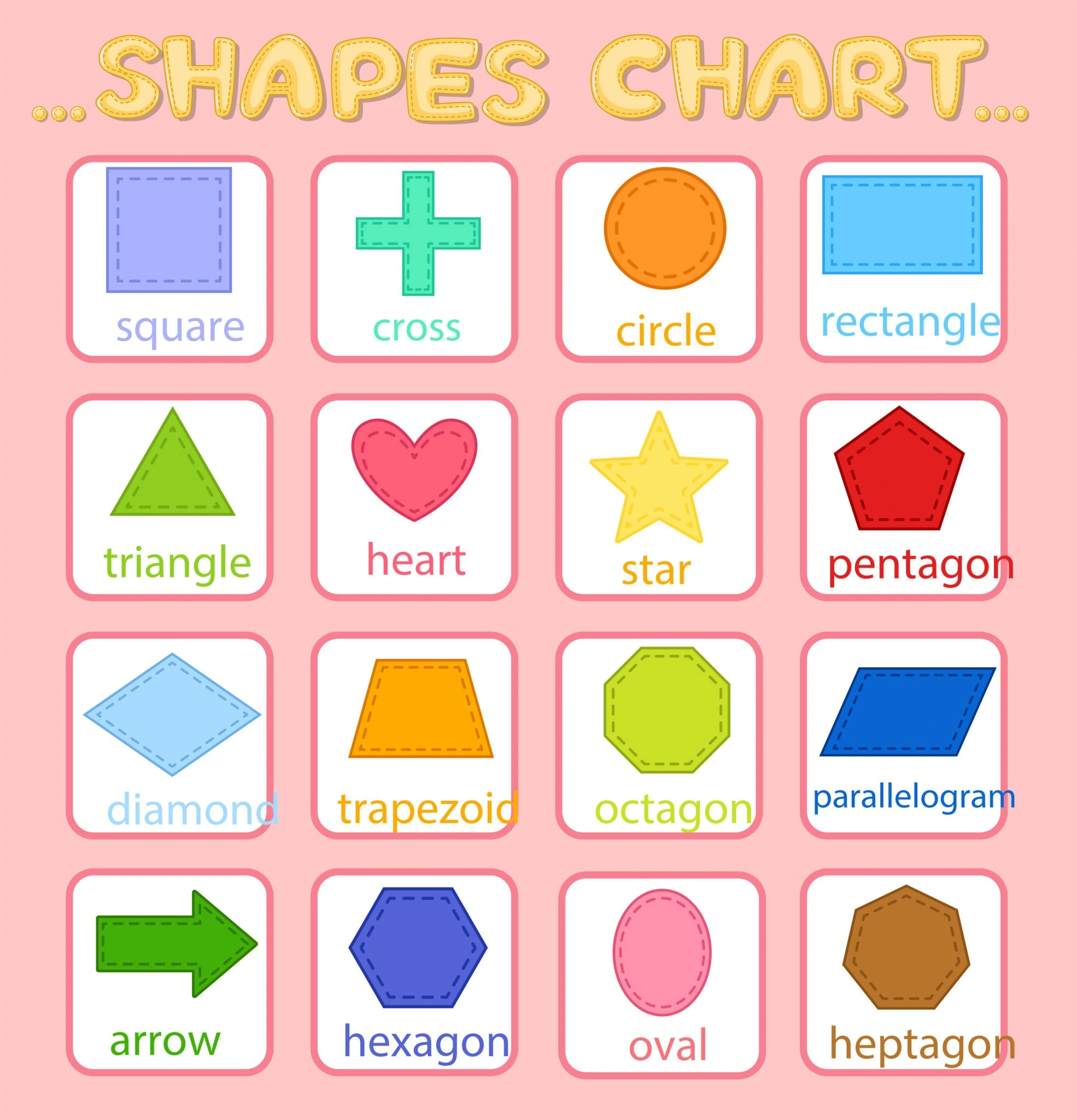
- 1. Pre-Math Concepts: Big vs Small, Tall vs Short, Heavy vs Light, Full vs Empty.
- 2. Numbers (1-20): Oral counting from 1 to 20. Tracing and writing numbers 1 to 10 initially.
- 3. Shapes: Identifying basic shapes: Circle, Square, Triangle, Rectangle.
- 4. Colors: Recognizing Primary Colors (Red, Blue, Yellow) and Secondary Colors (Green, Orange).
C. General Awareness (EVS)
This subject helps the child understand the world around them. It is mostly oral and activity-based.
- My Self: My name, body parts, my school, my family.
- Seasons: Summer, Winter, Rainy.
- Transport: Road, Air, and Water transport.
- Animals: Wild animals vs. Domestic animals.
- Good Habits: Washing hands, sharing, saying “Thank You” and “Sorry”.
Once the child masters these basics, the syllabus moves month-by-month to ensure steady progress. In the next section, we provide the Month-Wise Planner (April to March) which is the most requested resource by new school owners.
3. Month-Wise Nursery Syllabus Planner (2026-27)
To make learning systematic, we have divided the syllabus into monthly goals. This ensures the child is not overwhelmed. You can use this as a checklist.
| Month | English (Letters) | Maths (Numbers) | EVS & Activities |
|---|---|---|---|
| April | Pattern Writing (Standing/Sleeping Lines) | Concept: Big/Small | Myself, My Body Parts, Red Color Day |
| May – June | Summer Vacation (Holiday Homework: Coloring & Clay Modeling) | – | Summer Season, Mango Party |
| July | Letters A, B, C, D (Phonics sounds) | Numbers 1, 2, 3 (Oral & Tracing) | My Family, Rainy Season, Blue Color Day |
| August | Letters E, F, G, H | Numbers 4, 5, 6 | Independence Day Craft, Shapes (Circle) |
| September | Letters I, J, K, L (Revision A-L) | Numbers 7, 8, 9, 10 | Fruits & Vegetables, Green Color Day |
| October | Letters M, N, O, P | Concept: Tall/Short | Wild Animals, Diwali Celebration |
| November | Letters Q, R, S, T | Numbers 11 to 15 (Oral) | Transport (Car, Bus), Shapes (Square) |
| December | Letters U, V, W, X | Numbers 16 to 20 (Oral) | Winter Season, Christmas Tree Decoration |
| January | Letters Y, Z (Complete A-Z) | Revision 1-20, Matching count | Republic Day, Helpers (Doctor, Teacher) |
| Feb – Mar | Final Revision & Assessment | Oral Test & Worksheet | Preparation for LKG (Bridge Course) |
Please do not pressure the child to write perfectly within the first few months. Every child has a different learning pace. Focusing too much on handwriting at age 3 can cause “Writing Anxiety.” Keep the learning 80% playful and 20% structured.
4. Nursery vs. LKG Syllabus: What is the difference?
Many parents get confused between Nursery and LKG (Lower Kindergarten). Here is the simple difference:
- Nursery: Focus is on recognition, holding a pencil, and oral skills. (A for Apple).
- LKG (Junior KG): Focus shifts to writing small letters (a-z), spelling 3-letter words (C-A-T), and basic addition.
Now that you have the complete roadmap, you might be looking for Worksheets or Activity Ideas to teach these concepts at home. In the final section, we will share some DIY activity ideas and the PDF Download link.
5. Fun Activity Ideas for Home Learning
Don’t make the child sit with a notebook for hours. Use these “Play-Way” methods recommended by experts:
Take a plate full of sand or flour (atta). Ask the child to write ‘A’ or ‘1’ using their finger in the sand. This improves muscle memory.
Give them play-dough (clay) to make shapes like snakes (Standing Line) or balls (Circle). This strengthens their fingers for writing later.
6. Download Nursery Syllabus PDF 2026
Do you want to keep this syllabus handy? You can download the complete National Curriculum Framework (Foundational Stage) by NCERT below. It covers all guidelines for Nursery, LKG, and UKG under NEP 2020.
*Source: Official Website of NCERT (Govt of India)
Frequently Asked Questions (FAQ)
What is the correct age for Nursery Admission?
Is Hindi compulsory in Nursery?
Does my child need to know writing before admission?
How many hours should a Nursery child study?
Conclusion: Happy Learning!
The journey of a thousand miles begins with a single step. Nursery is that first beautiful step. Focus on making learning fun rather than perfect.
If you are looking for free admission options, don’t forget to check our guide on RTE Admission 2026. If you have any questions about the syllabus, comment below!

Alok is the Founder and Chief Editor of StartAPreschool.in. A passionate Education Researcher & Blogger, he specializes in decoding Government Education Schemes, RTE Admission rules, and Preschool Business models in India. His mission is to provide accurate, transparent, and NEP 2020-aligned information to parents and edupreneurs.
Pingback: NTT Course Fees, Duration & Admission 2026 (Real vs Fake Institutes) - startapreschool.in
Pingback: Minimum Age for Nursery & LKG Admission 2026-27 (NEP Age Chart) - startapreschool.in
Pingback: LKG Syllabus 2026-27 CBSE PDF Download (All Subjects) - startapreschool.in